
HKUST tests whole-arm touch sensing for robot manipulation
HKUST researchers embedded optical tactile skin into a robot arm and tested touch recognition, object balancing and obstacle response in the lab.
Read article →Browse every saved RobotMe news article and curated brief. Stories stay accessible here when newer updates replace them in the latest feed. Dates below are the original publication dates.
192 saved articles · Page 3 of 7
HKUST researchers embedded optical tactile skin into a robot arm and tested touch recognition, object balancing and obstacle response in the lab.
Read article →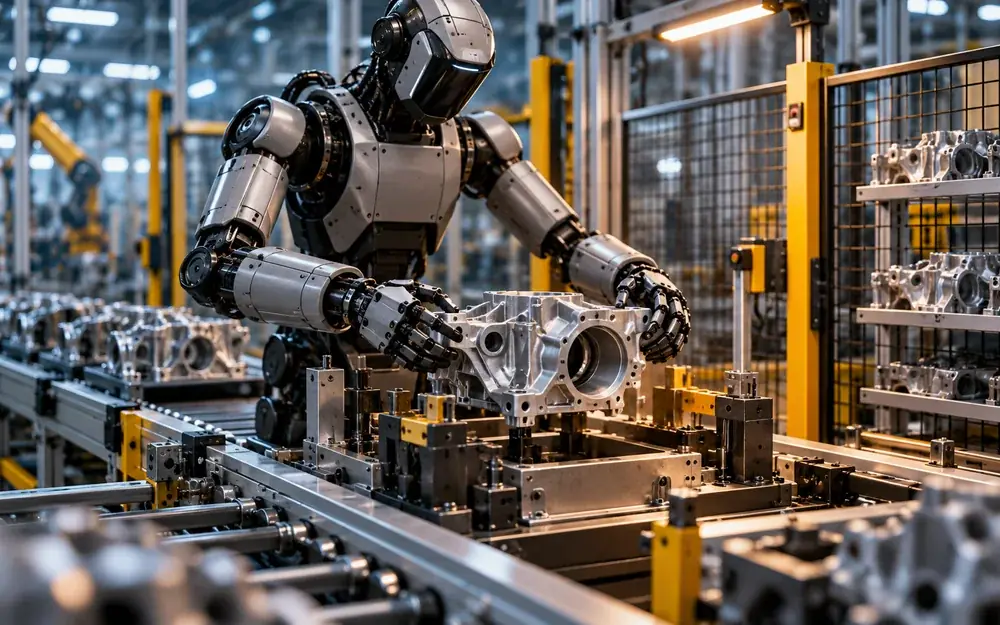
Hangzhou's official English portal reports that nearly 20 humanoid robots are handling production-line loading and unloading at an auto-parts factory in the city's Xiaoshan district.
Read article →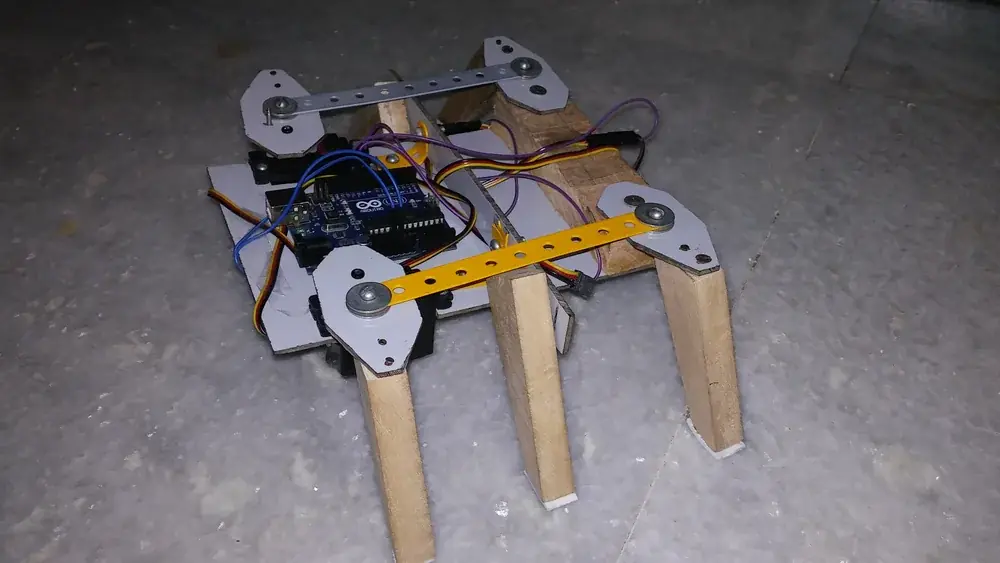
Illinois researchers combined reinforcement learning with contraction theory in CARL, then tested the controller on a wheeled robot, flapping drone and six-legged robot.
Read article →A multi-institution team introduced RAX, a framework in which a coding agent explores a robot task, writes control programs and reuses successful skills without task-specific action demonstrations.
Read article →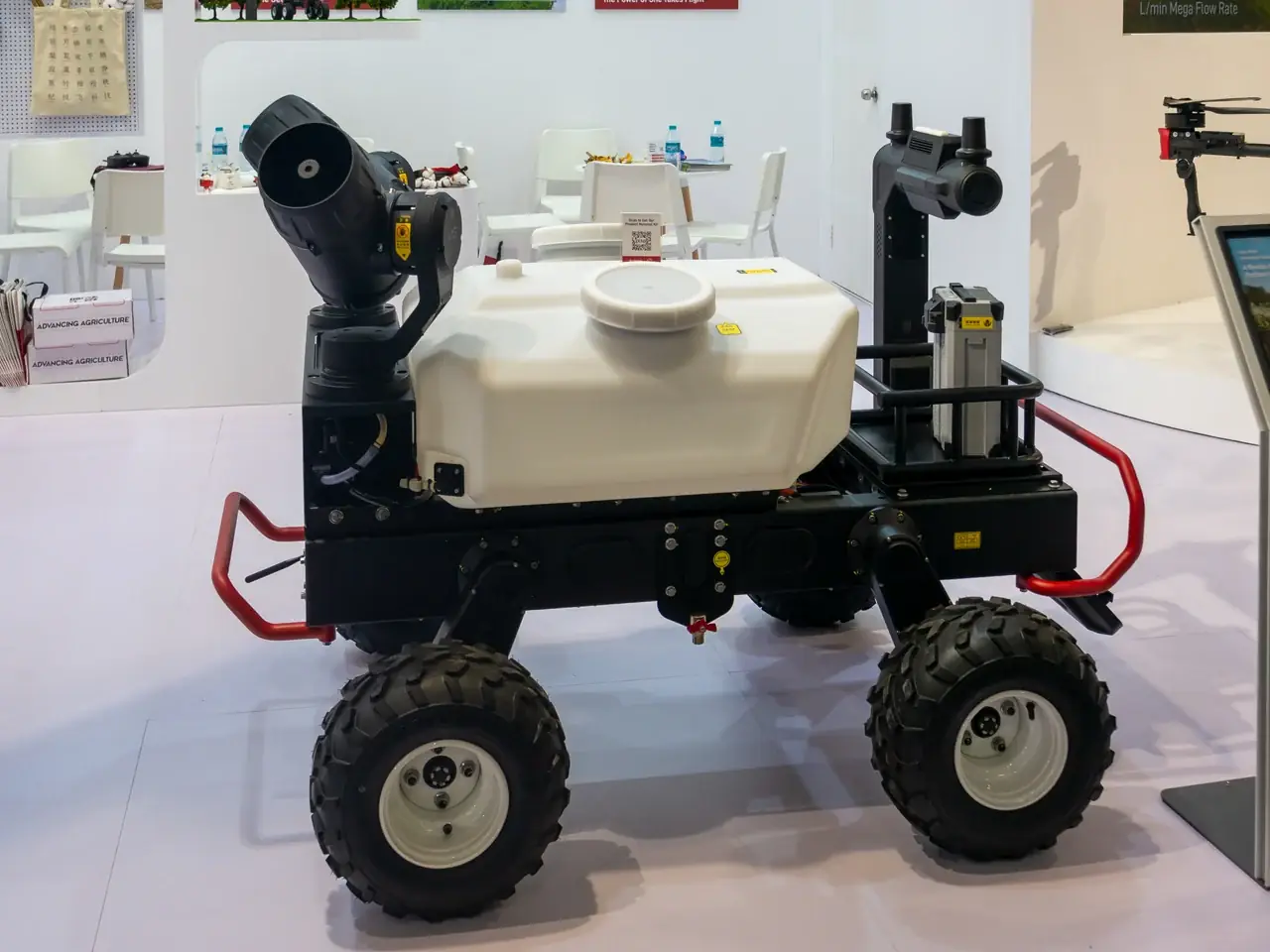
China's industry and agriculture ministries published a proposed list of agricultural-robot application scenarios. The public review period ran from October 15 through October 21, 2026.
Read article →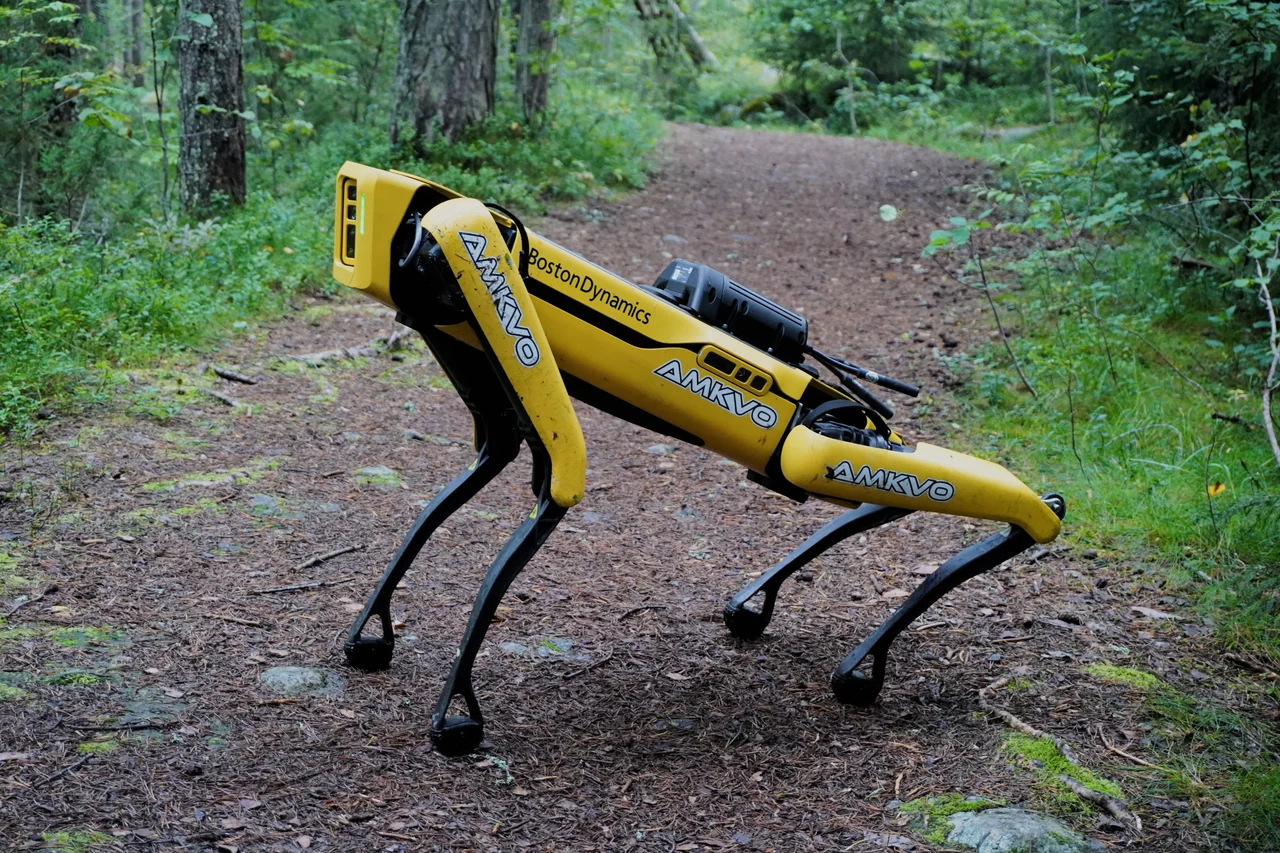
Google describes Gemini 4 Argon as a general-purpose model being tested across robotics tasks, including visual planning, robot control, simulation building, and labeling human or robot motion. Its examples include a Spot robot practicing a trash-bin task in simulation before acting on hardware. The demonstrations and benchmark figures are Google-reported results, not proof that the model can reliably run arbitrary robots in production.
Read article →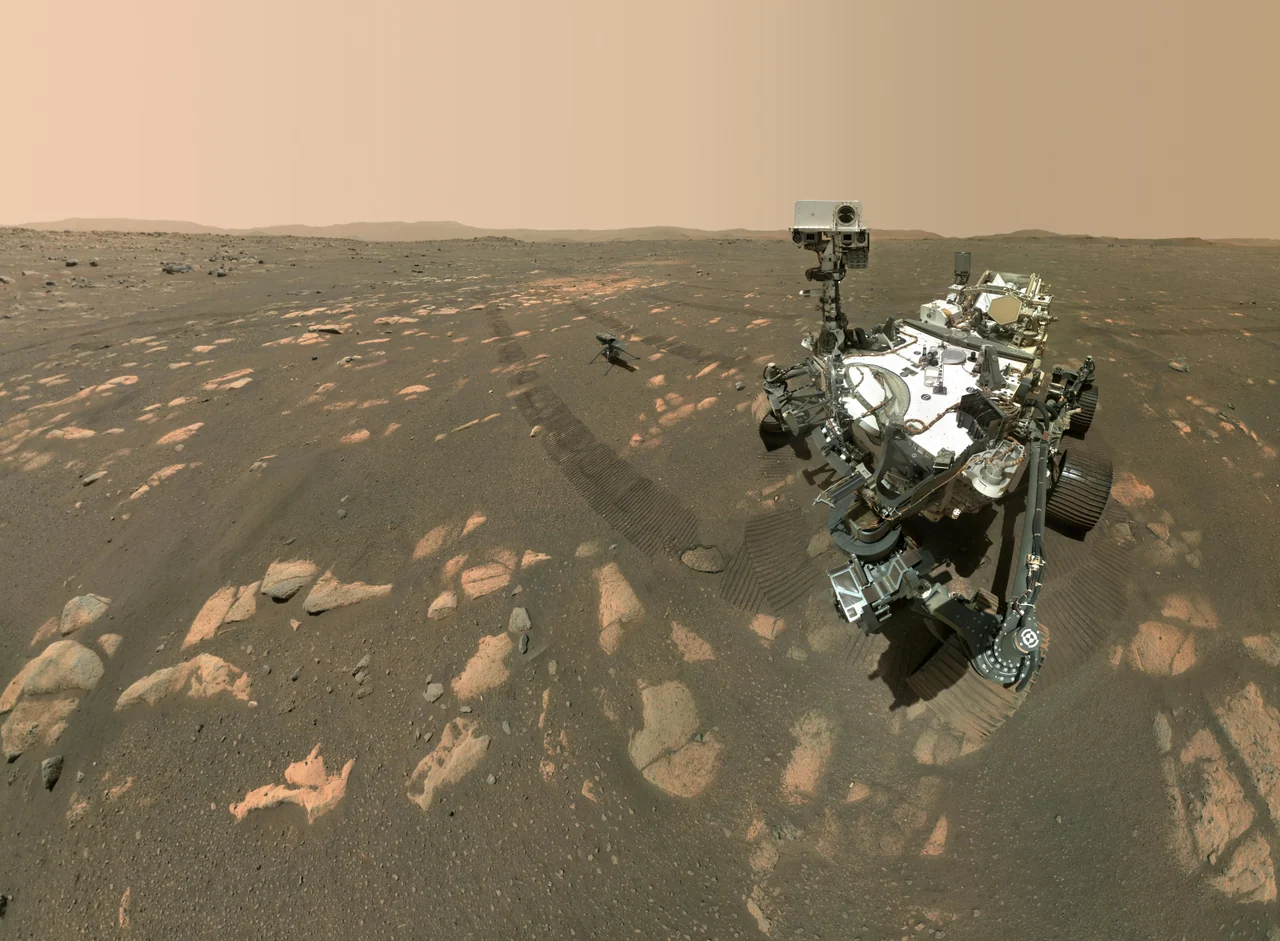
NASA’s Perseverance rover passed Opportunity’s Mars driving record on October 11, reaching 45.22 kilometers in five years. In an IEEE Spectrum interview, a JPL robotics lead explains how upgraded autonomous navigation lets Perseverance choose safe paths and spend more time driving without step-by-step instructions from Earth.
Read article →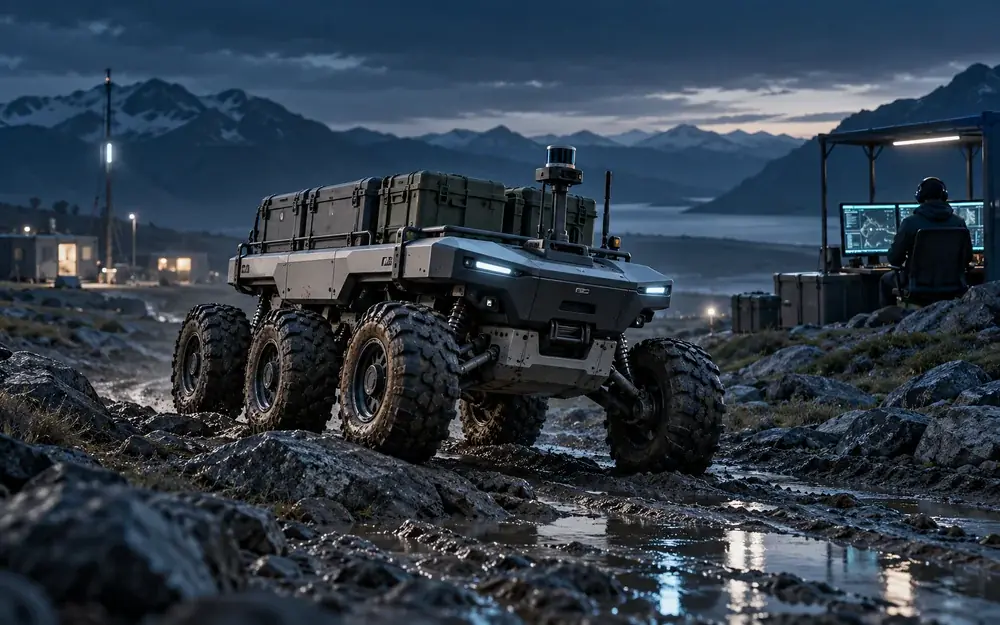
Researchers tested CTU's autonomous-navigation system on the six-wheeled TAROS vehicle during ARTEX 2026 in Portugal, including supervised off-road resupply and night navigation.
Read article →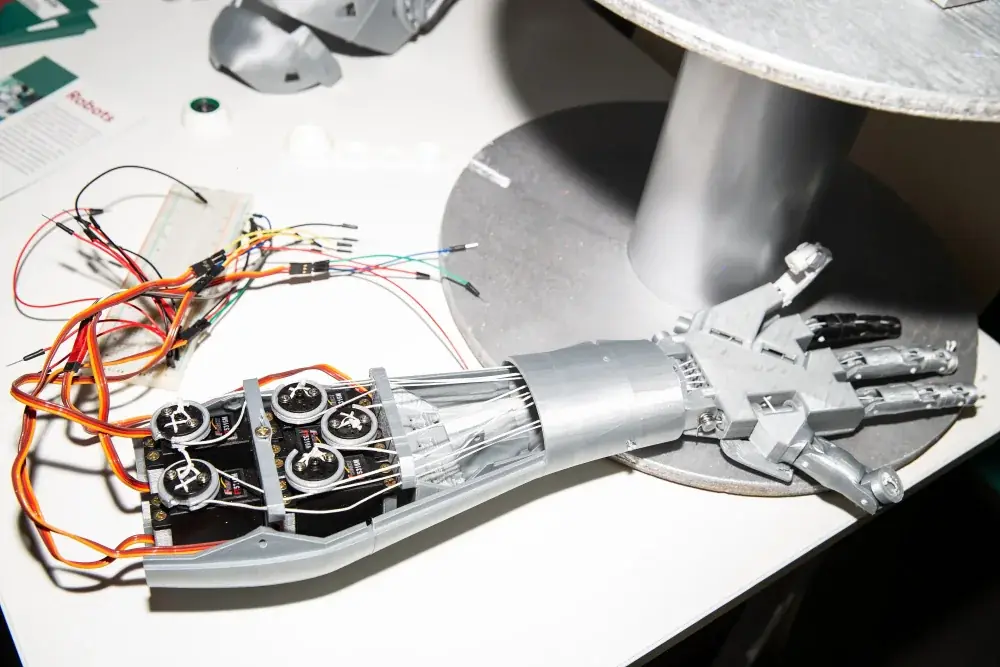
DexAgent reconstructs the physical interactions in one first-person human demonstration, generates varied robot trajectories in simulation and uses them to train a bimanual robot policy.
Read article →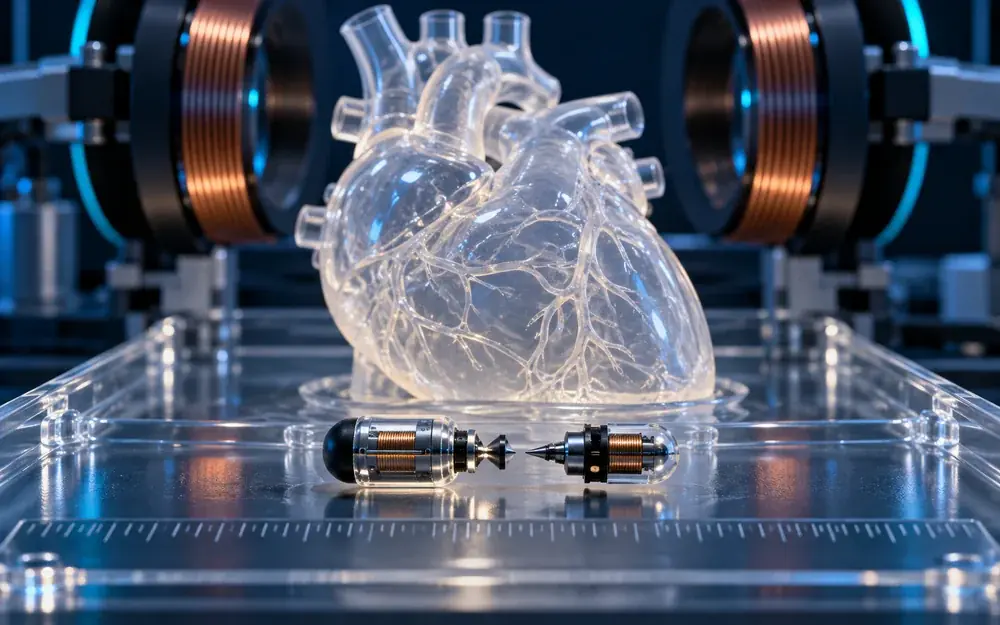
Johns Hopkins engineers built two wireless magnetic robots, each roughly the width of a pencil tip, to dock at heart tissue and deliver repeat doses of medicine. The team tested them in heart phantoms and on porcine heart tissue under simulated flow.
Read article →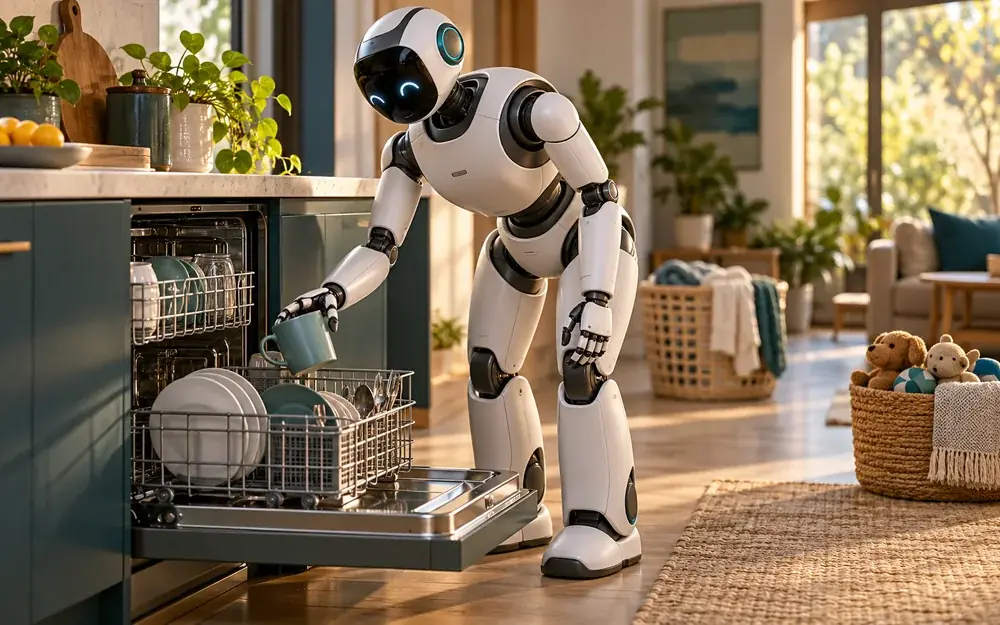
Delta Intelligence says a humanoid running its Delta-0 model planned 32 steps and completed nine household tasks across a bedroom, living room and kitchen in a continuous 210-second demonstration.
Read article →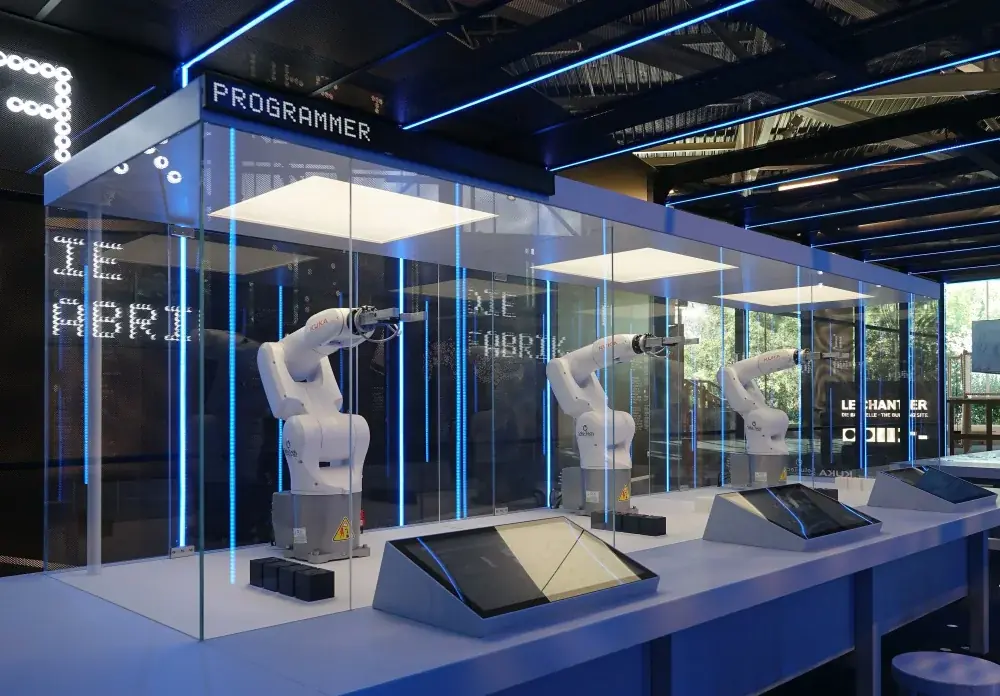
The University of Bristol says a 23-partner consortium received £7.2 million from Innovate UK and £2.6 million from partners to establish a regional robotics-adoption hub led by Bristol Robotics Laboratory.
Read article →
IEEE Spectrum’s Video Friday collects short robotics videos, including a Devanthro clip about robot decommissioning and a playful Reachy Mini segment. It also points to manipulation, locomotion, and other research demonstrations. The post is a video roundup with brief editorial comments, not an independent test of the featured machines.
Read article →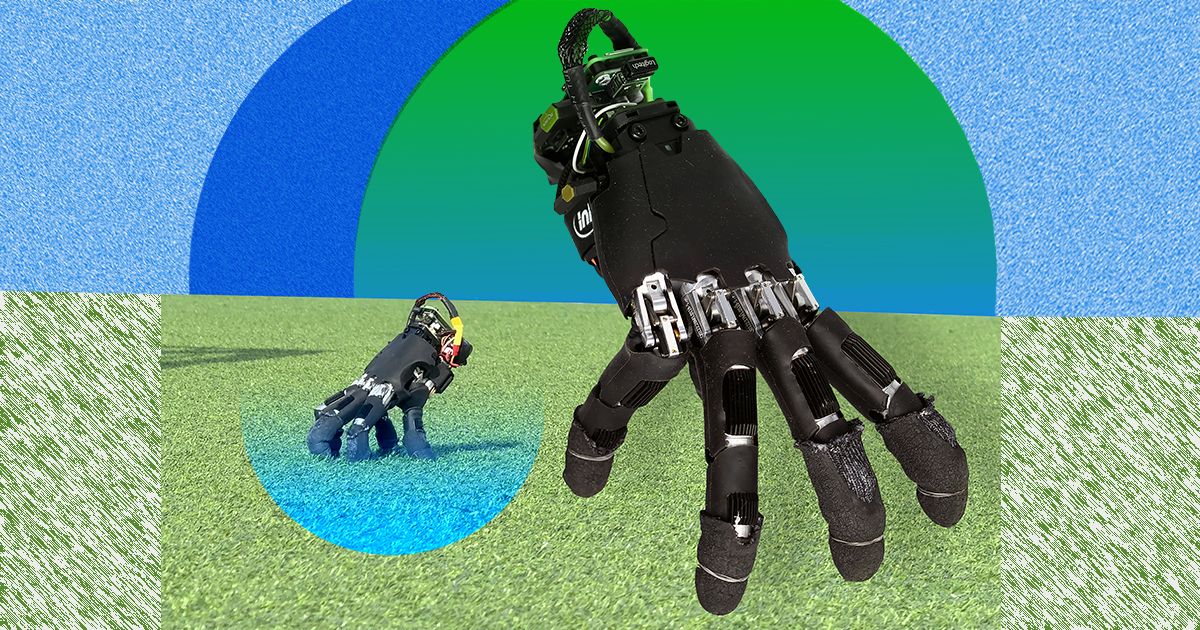
Researchers at ETH Zurich adapted a commercial robotic hand so it can crawl on its fingertips and still manipulate objects. They added a small battery and computer, then trained separate controls in simulation for walking, recovering from falls, and handling objects. The work explores whether a robot component could detach and reach spaces that a full arm cannot.
Read article →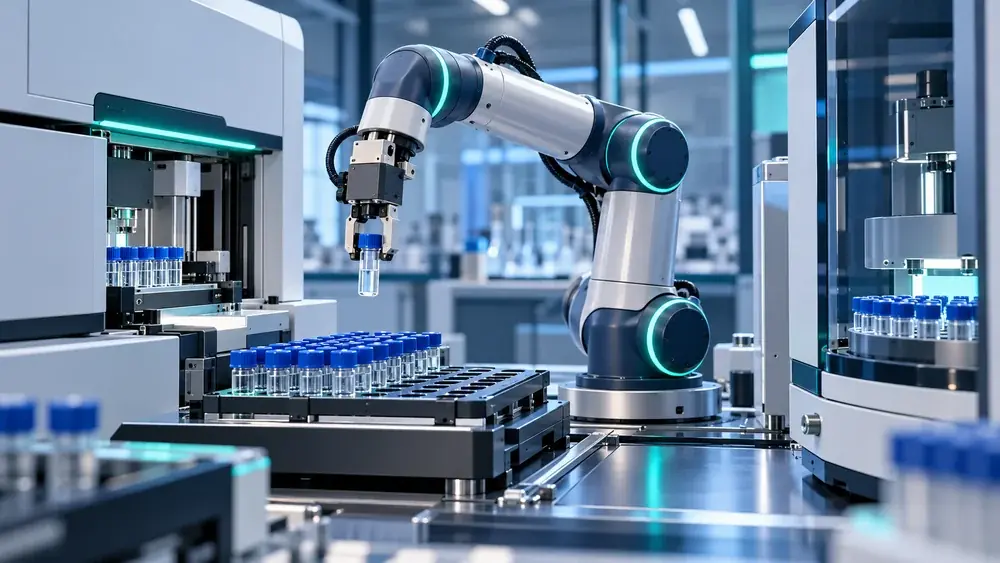
DOE selected lab-led projects at Argonne, Brookhaven, Oak Ridge and SLAC to negotiate robotics and automation testbeds for scientific facilities. The selections are not funding commitments.
Read article →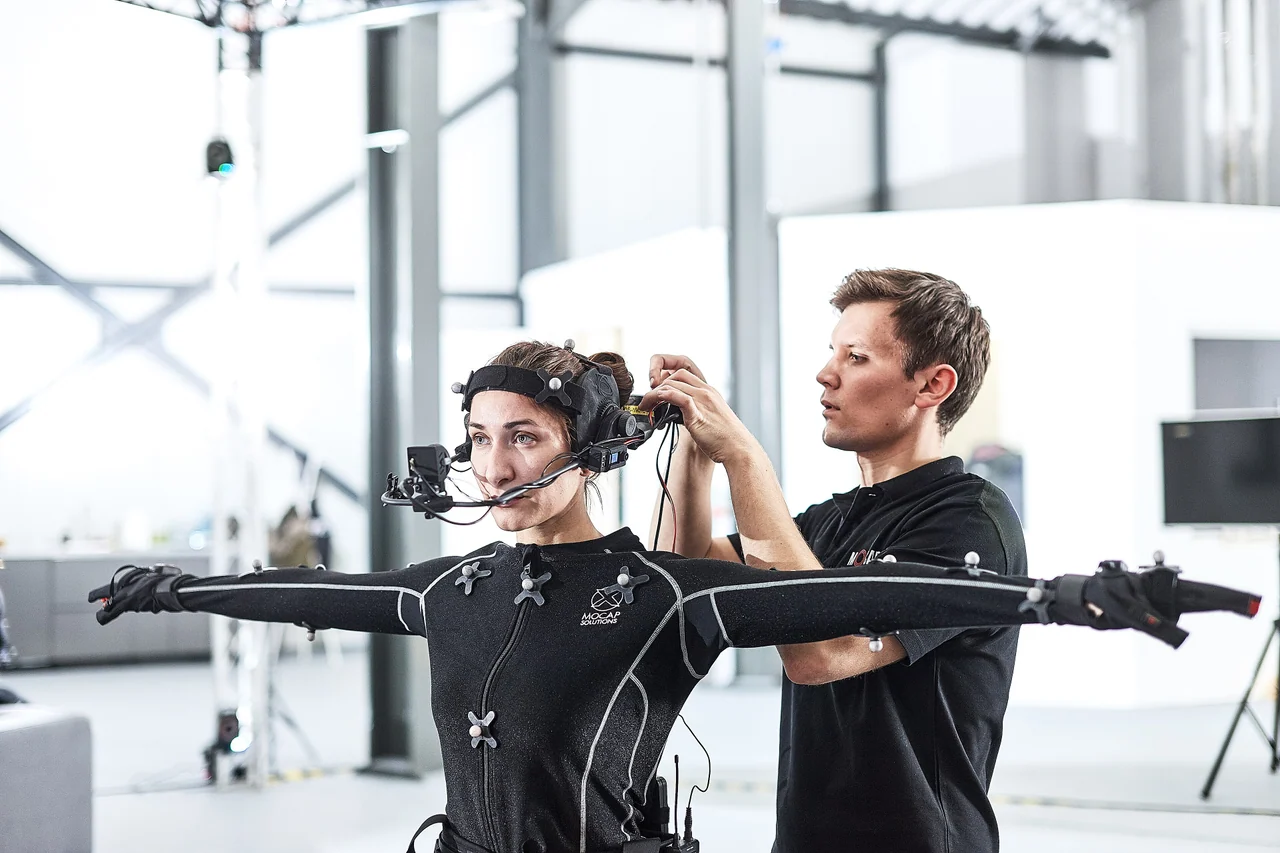
A sponsored, registration-gated white paper describes HiPHI, a human-motion dataset and benchmark intended for humanoid robot learning. Its page says the dataset contains 617.5 hours of whole-body motion, including 245.7 hours of human-object interaction, and discusses transfer to a Unitree G1 robot. RobotMe has reviewed the public description, not the full gated paper.
Read article →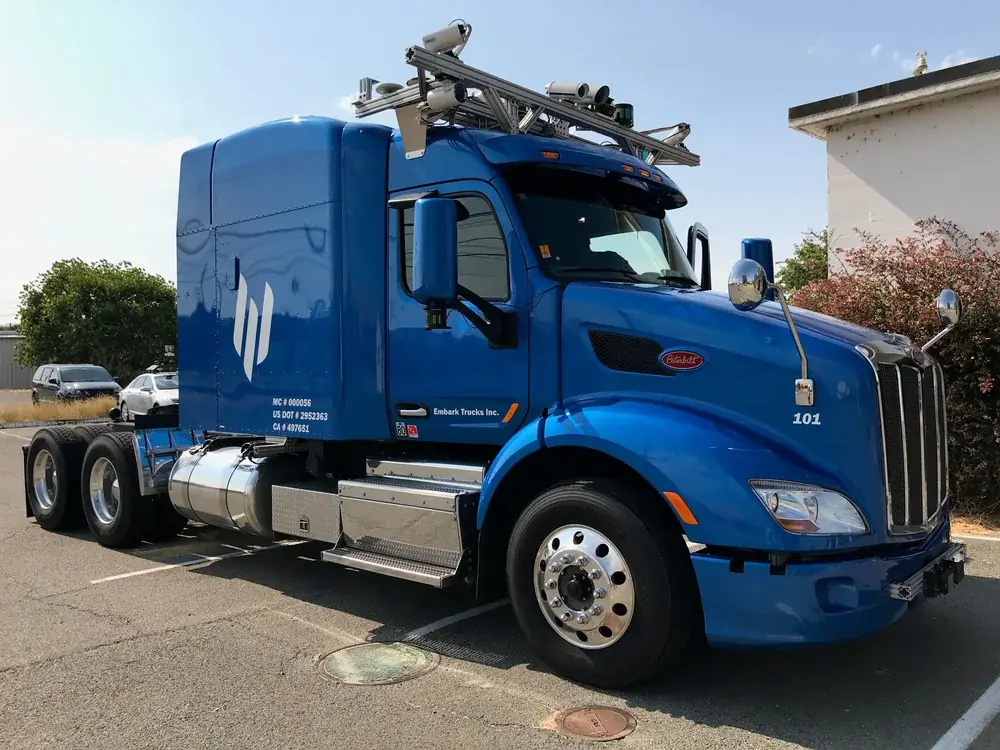
Aurora and other motor carriers that give FMCSA prior written notice may use qualifying cab-mounted warning beacons on Level 4 automated-driving-system commercial vehicles instead of placing traditional warning triangles or fusees around a stopped truck. The exemption also covers the related steady-burning-lamp rule and includes operating, equipment, crash-reporting, and annual-reporting conditions.
Read article →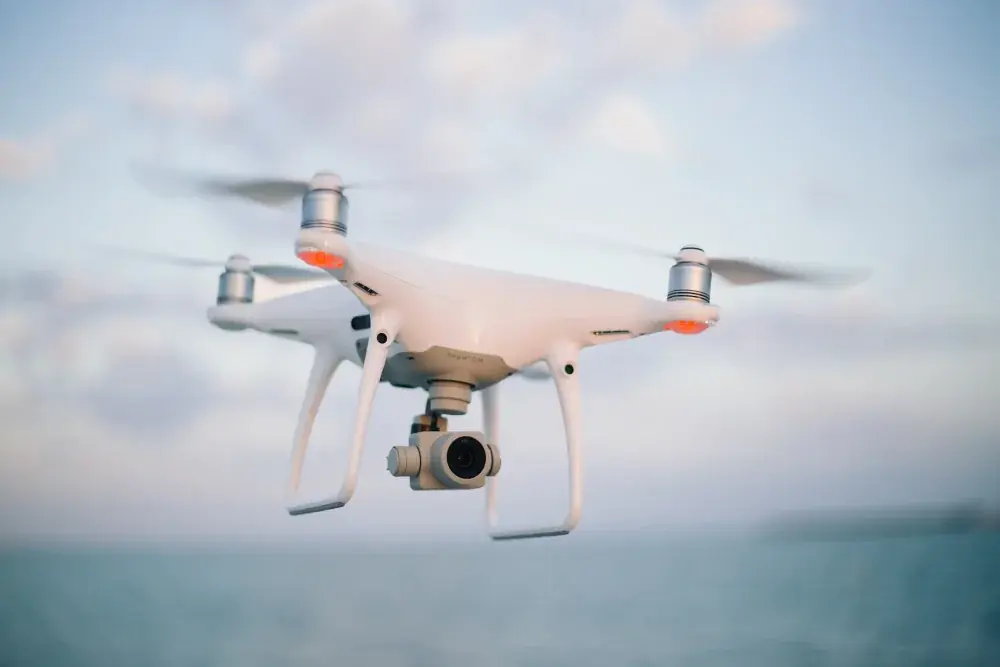
MIT's SANDO planner builds time-varying safety corridors so a drone can replan around moving obstacles in an unmapped environment while maintaining a formal collision-avoidance guarantee.
Read article →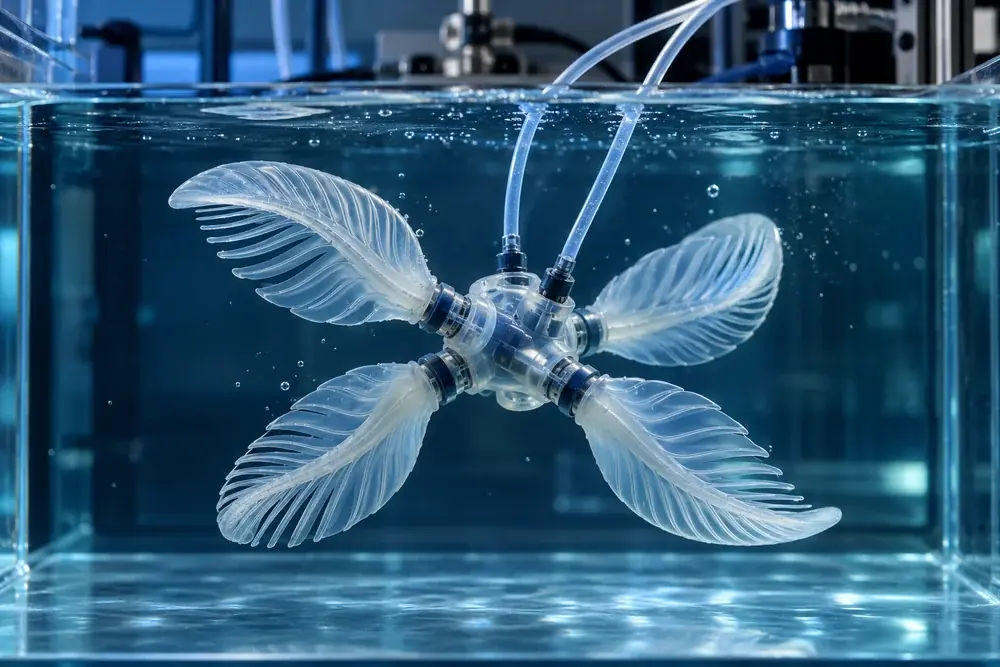
Researchers built a four-wing soft swimmer that uses two pneumatic inputs and the mechanics of its elastic limbs to switch among rising, sinking, hovering, forward or backward swimming and axial rotation.
Read article →Three UMD projects use polarization to perceive glass, first-person human video to teach manipulation and event memory to combine vision and touch during multistep tasks.
Read article →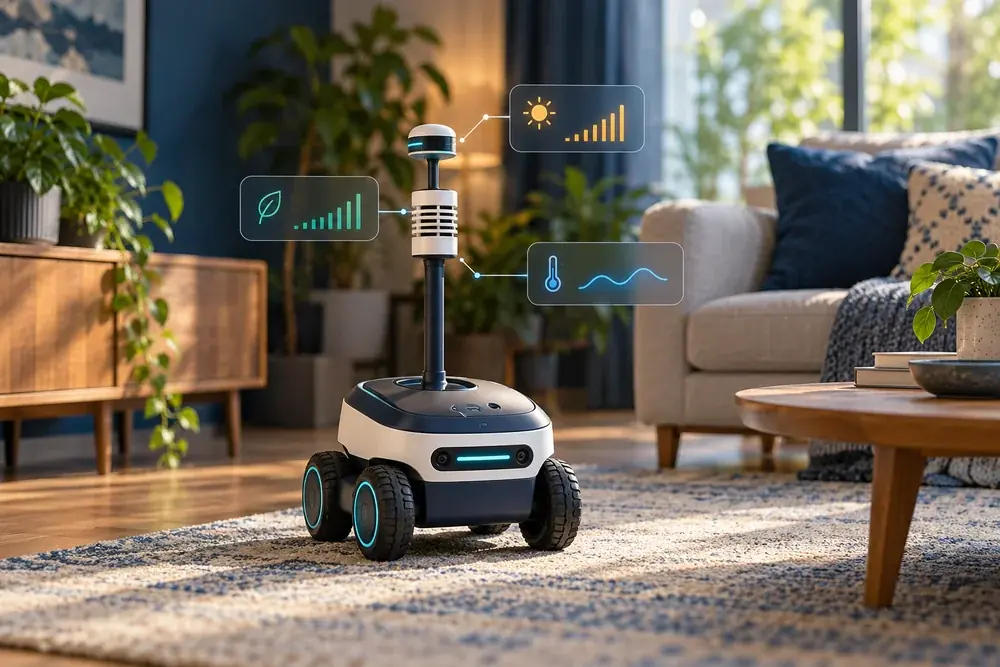
CMU researchers developed a mobile robot that moves through homes to collect room-level temperature, air-quality and lighting data instead of relying on a single fixed thermostat or sensor.
Read article →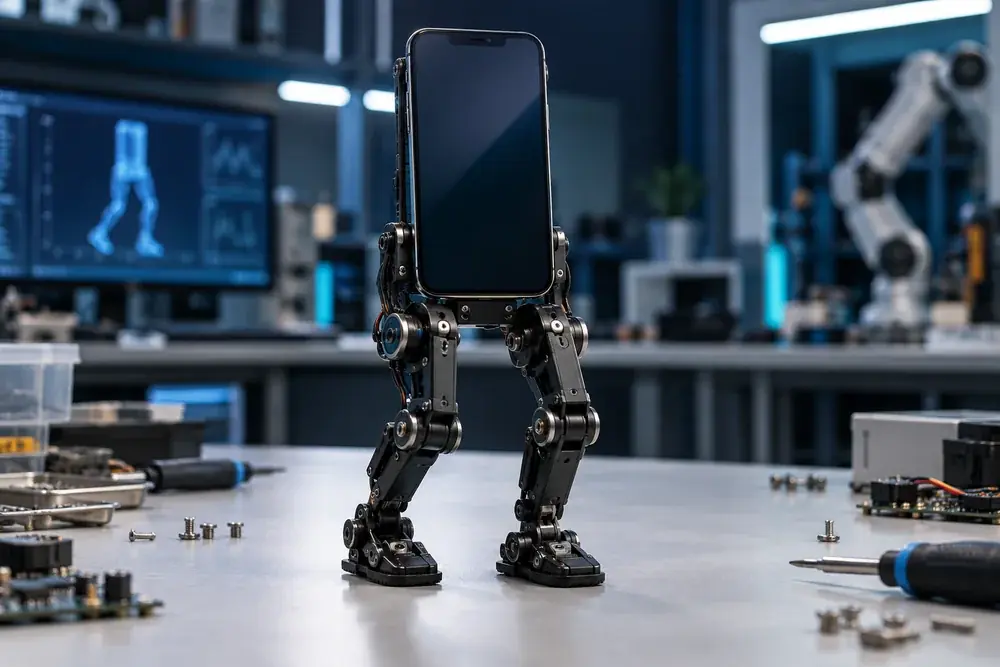
UCLA's PhoneBot is a 48-centimeter, 1.8-kilogram humanoid that uses a commodity Android phone for sensing, control computation and interaction; the researchers estimate about $400 in robot hardware before the phone.
Read article →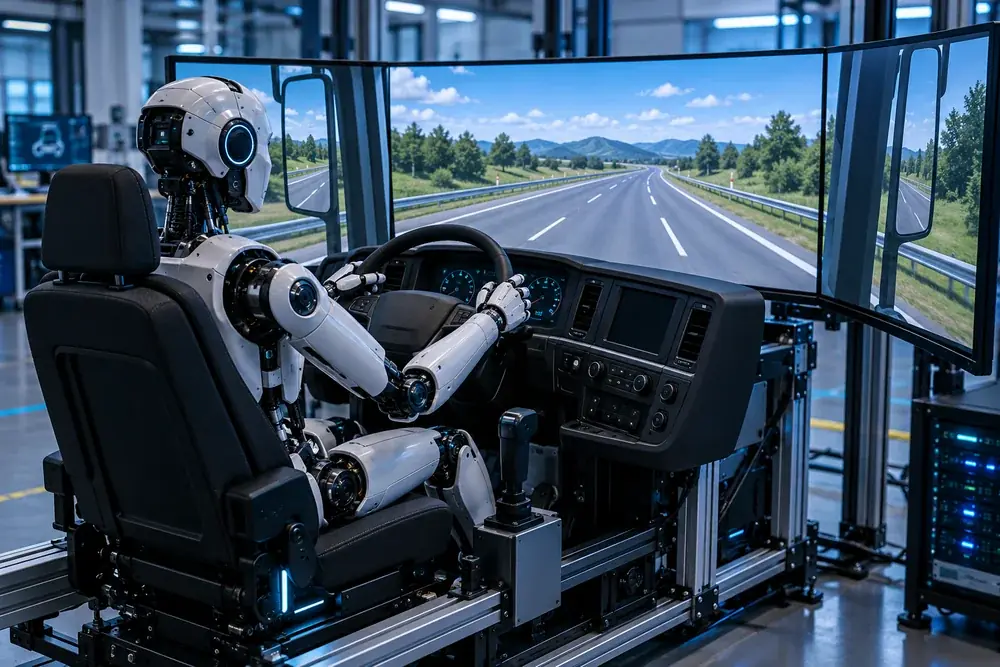
RWTH Aachen's HAINZ humanoid uses the institute's openADS software while seated in a truck simulator, taking control of a driving task through an interface designed for human operators.
Read article →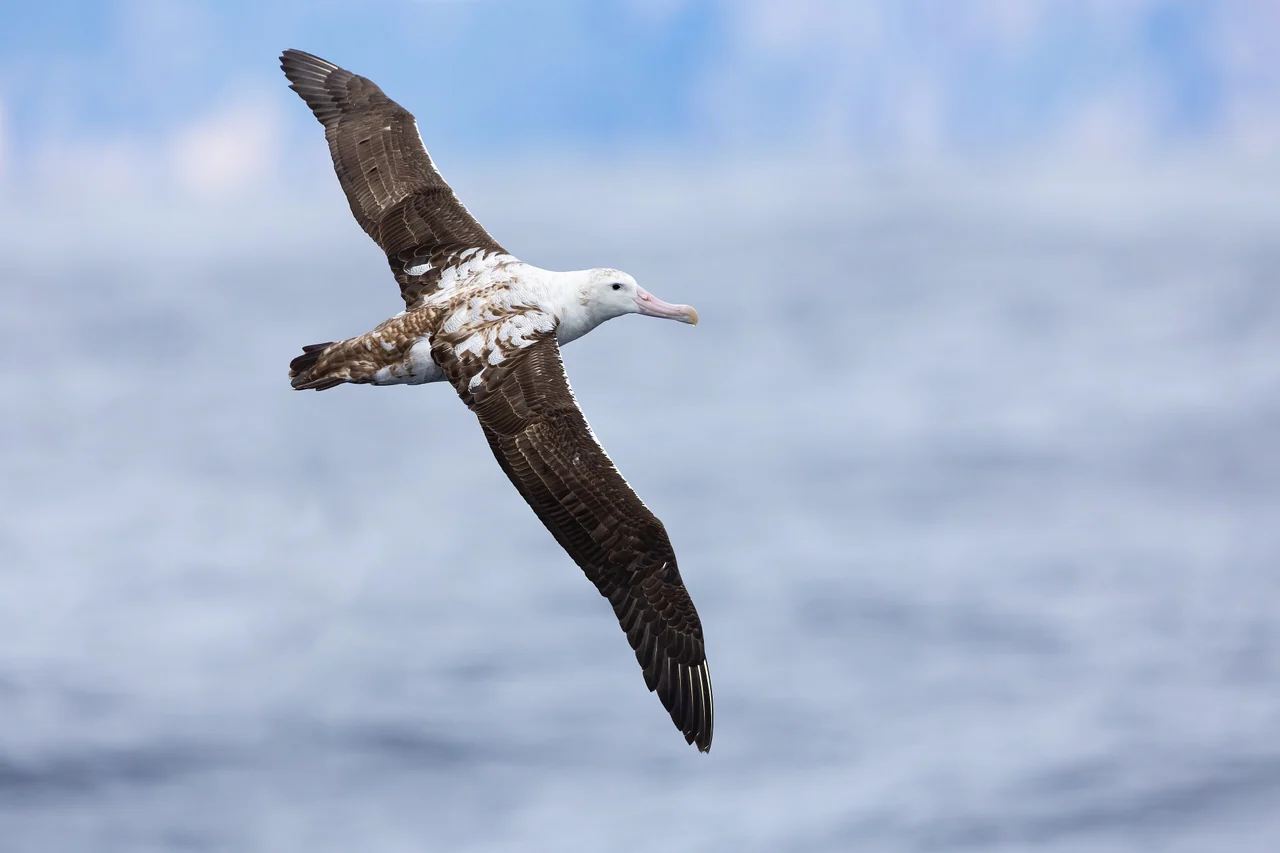
IEEE Spectrum’s Video Friday highlights an albatross-inspired robotic “flying boat” and several other robotics clips. The roundup also points to a modular arm designed to assemble after passing through tight spaces, a concept relevant to disaster response. The source page contains the videos and the editor’s short observations.
Read article →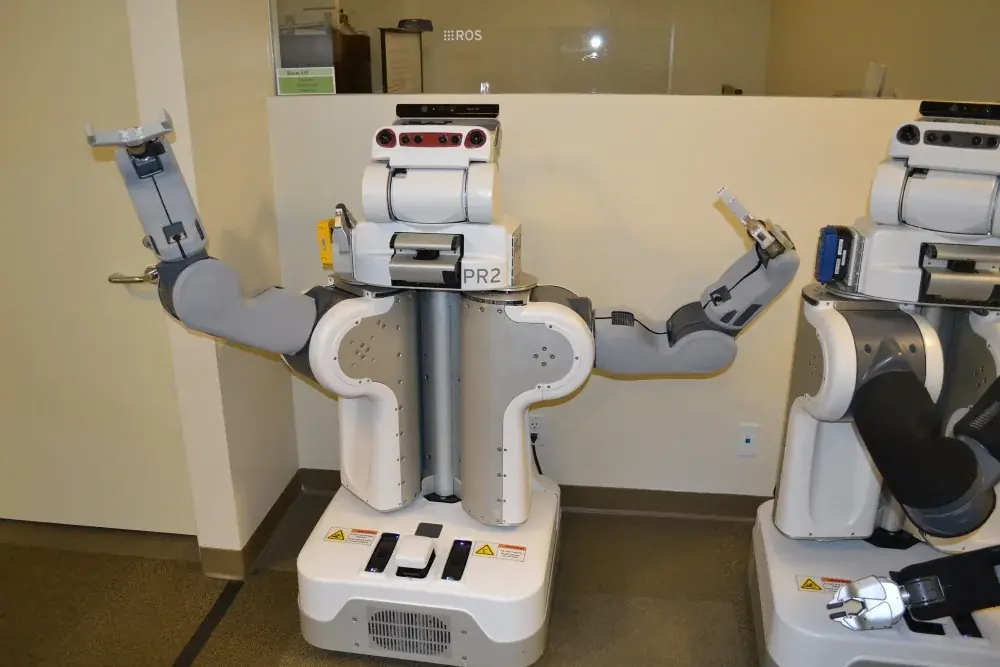
Penn's SymSkill system learned reusable manipulation skills from five minutes of video demonstrations, then completed tasks of up to 12 steps in simulation and on a physical robot.
Read article →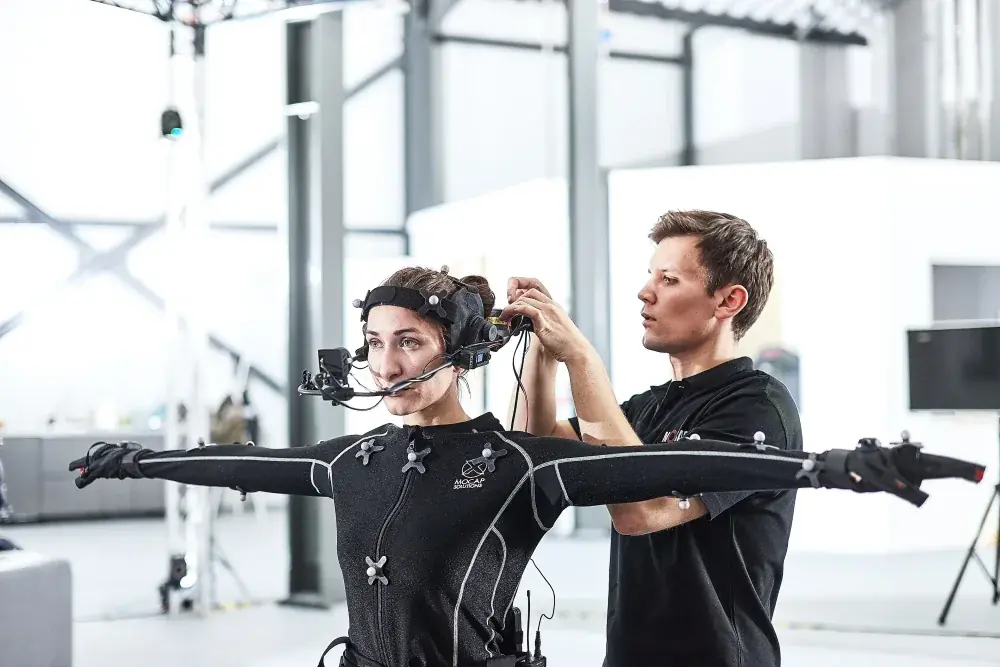
Maryland's Mu Zero world model learns three-dimensional motion traces from videos, then provides that motion information to a robot-specific controller for manipulation tasks.
Read article →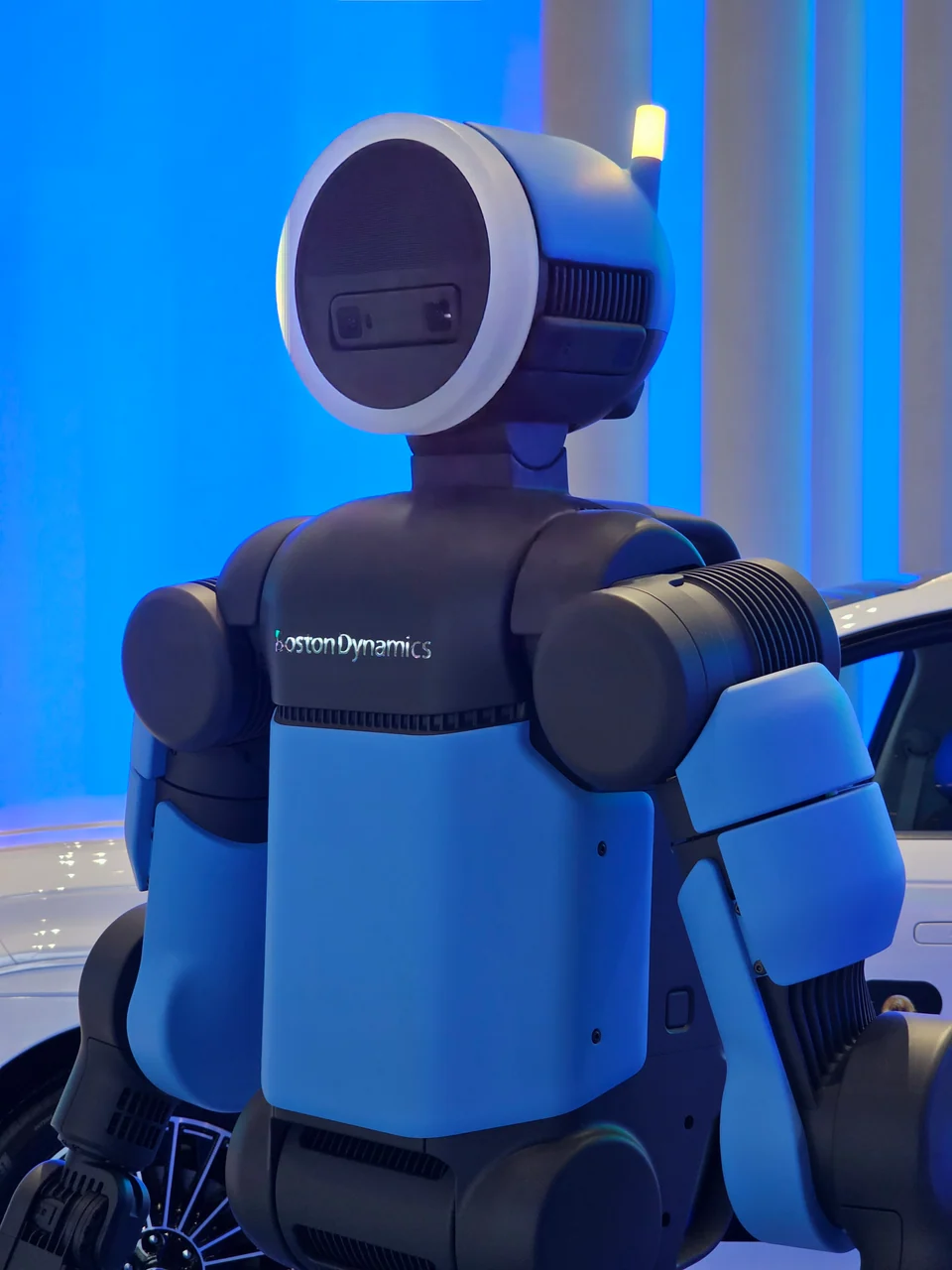
Boston Dynamics redesigned Atlas’s hand around durability, repairability, and production rather than a humanlike silhouette. Its thumb and three fingers have 13 degrees of freedom in total, intended to support gripping and tool use with less mechanical complexity. The article explains the company’s design trade-offs; broad real-world reliability has yet to be demonstrated.
Read article →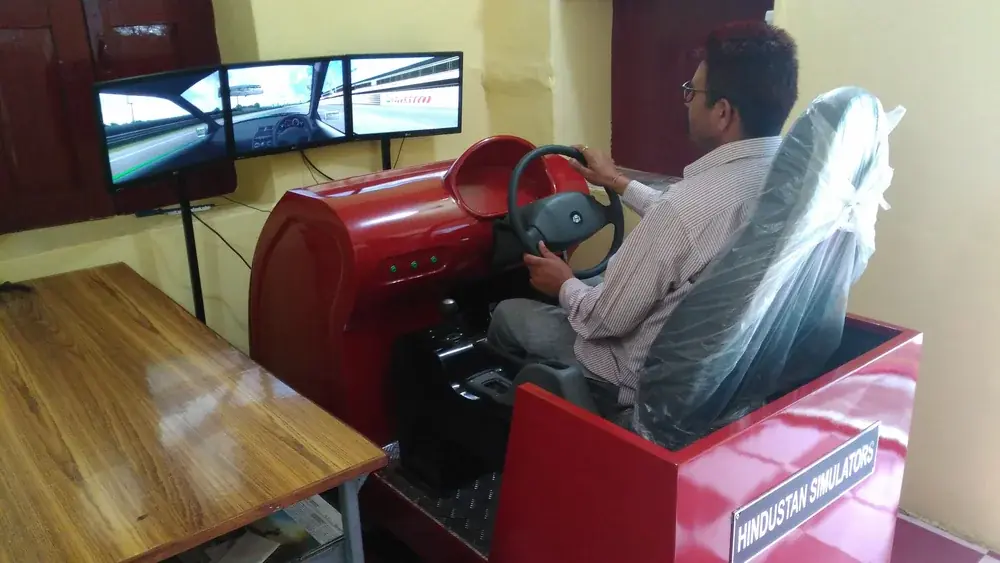
Researchers tested a steering wheel with inflatable haptic zones that lets a driver and semi-autonomous system signal and negotiate planned turns before the vehicle acts.
Read article →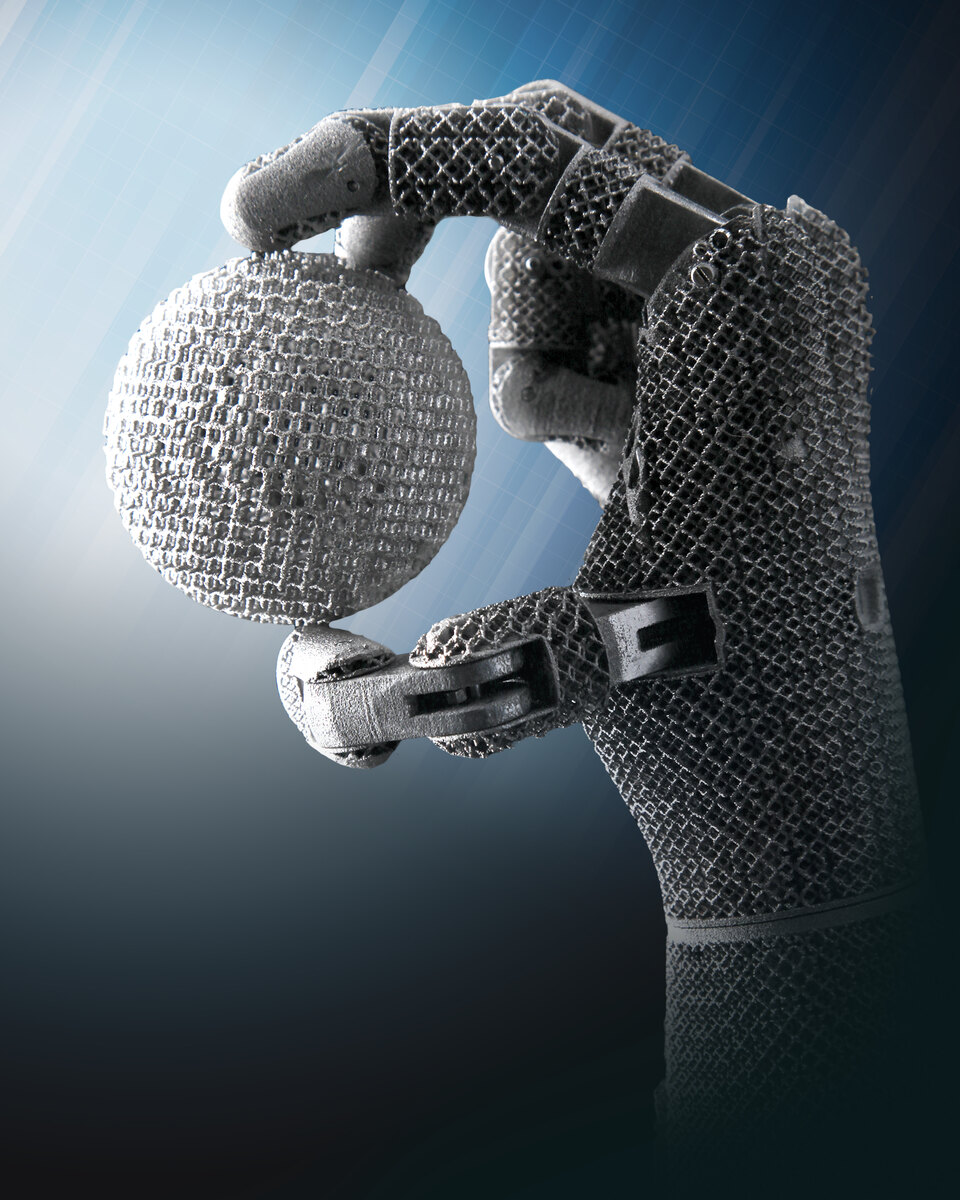
Innodata has opened a motion-capture laboratory to produce training data for humanoids and other robots, The Robot Report reports. The company says the facility records people, robots and handled objects directly in three dimensions using Vicon optical tracking.
Read article →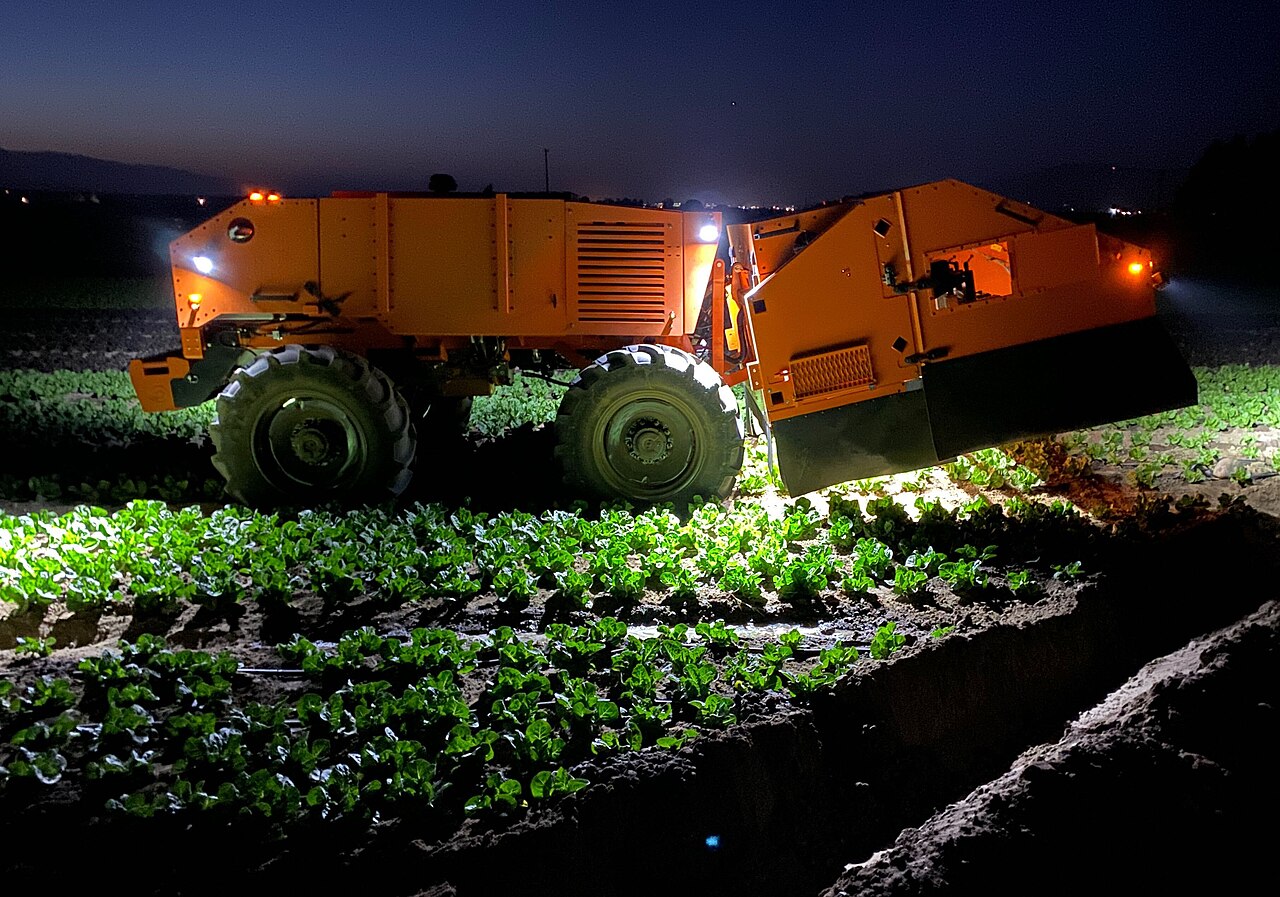
ASI and SoftBank have announced a joint venture aimed at commercializing autonomous heavy equipment for large infrastructure projects, according to The Robot Report. The partnership targets coordination of mixed fleets across equipment brands.
Read article →