
Johns Hopkins tests paired magnetic millirobots for heart-drug delivery
What happened
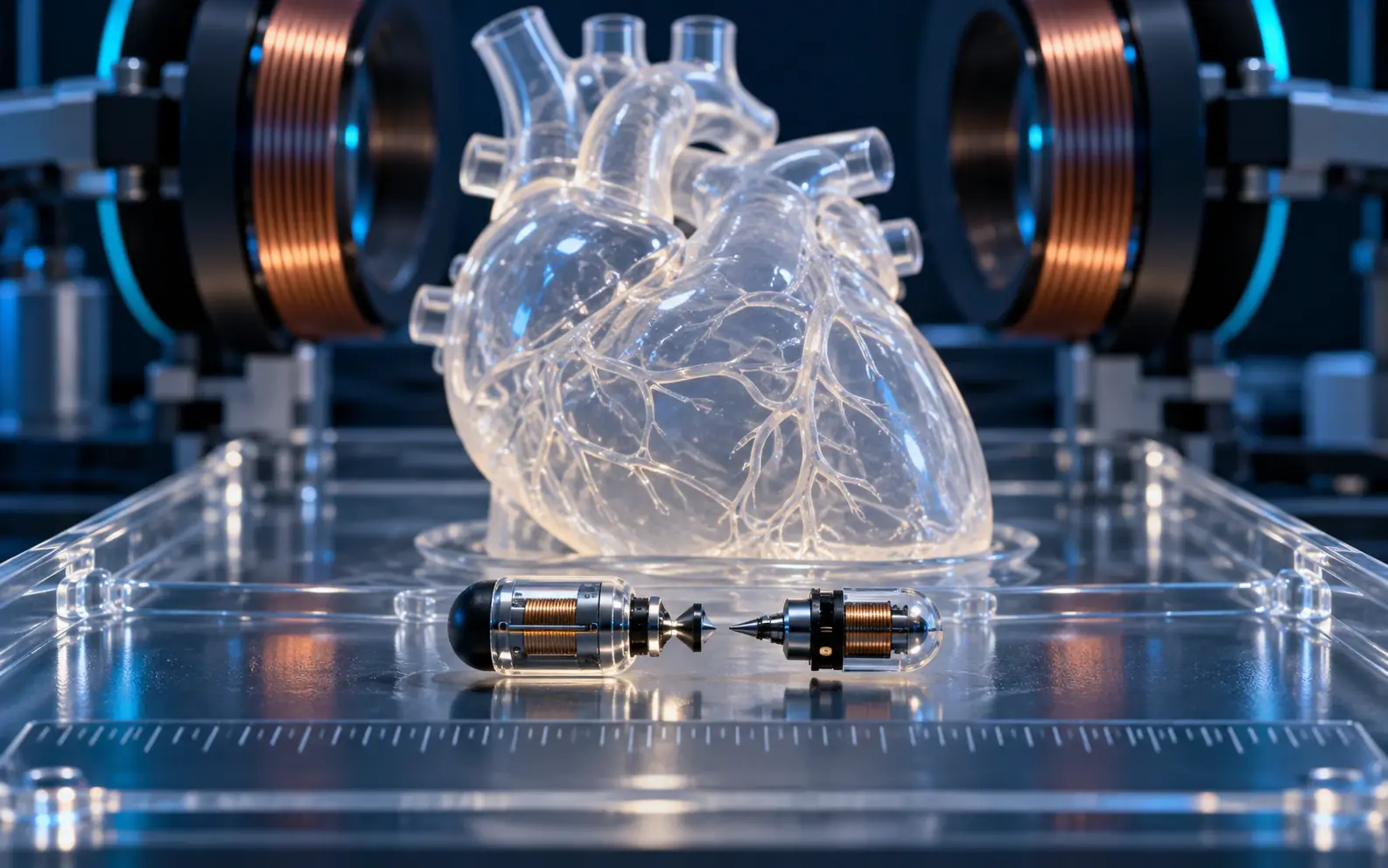
An external electromagnetic coil system guides a needle module to the target, where it acts as a docking station, and then steers a replaceable drug-carrying module to it. Johns Hopkins reports that the robots traveled autonomously against simulated blood flow; the next planned step is testing in more realistic phantom hearts that reproduce muscle contraction and beating motion.
Why it matters
The paired design could make repeated, localized drug delivery possible without putting batteries or motors inside the robot. This is a preclinical bench prototype, not a live-animal study, patient trial or available treatment, and the university's shorter-treatment estimates have not been demonstrated clinically.
Source checked October 31, 2026. Status describes the evidence in the linked source at the time of review.