
ETH co-designs living muscle and scaffolds for small biohybrid robots
What happened
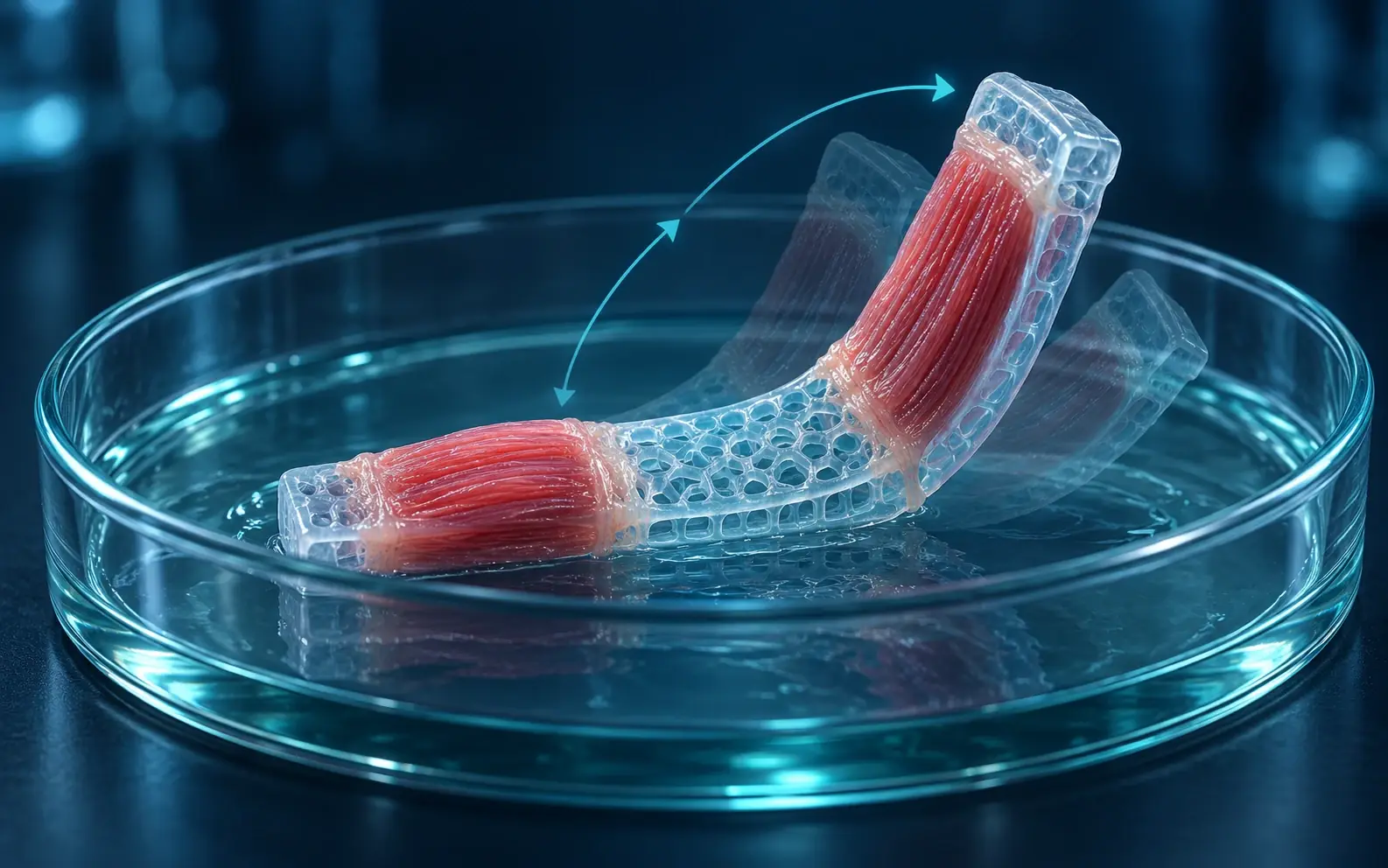
The team used computer simulation to co-optimize the placement of mouse skeletal muscle tissue and the properties of a 3D-printed hydrogel scaffold. ETH reports that the roughly 1.5-centimeter actuators achieved up to eleven times the motion range of earlier systems with a comparable amount of muscle, jumped about five millimeters and walked at 6.2 millimeters per second. The study was published in Nature Communications.
Why it matters
The work shows that muscle geometry and its artificial support can be designed as one system to produce larger movements across several physical robot forms. These are controlled laboratory prototypes, not autonomous or deployable robots: the living tissue requires nutrient solution, varies between samples and would need an artificial blood supply to support larger, longer-lived systems.
Source checked October 31, 2026. Status describes the evidence in the linked source at the time of review.